Planning your evening
What to expect: pipes, dance, dinner
What happens at the Spirit of Scotland Show, how the pipes and Highland dances work, what to wear, who it suits and where to go.
See Spirit of Scotland Show tickets on GetYourGuide ↗Quick answer
Expect a seated dinner at the Royal College of Surgeons on Nicolson Street, with a show of pipes, Highland dance, accordion, song and storytelling alongside it. The whole evening takes about three hours and the show itself about ninety minutes. Dress is up to you, you don't need to dance or know Scottish history, and your confirmation gives the arrival time for your date.
The evening at a glance
| What to know | |
|---|---|
| Whole evening | About three hours |
| The show | About ninety minutes |
| Seating | At a dinner table |
| Season | Nightly, April to October |
| Ages | All ages, children's menu |
How the night runs
You arrive at the time your confirmation gives, meet the Pipe Major on Nicolson Street just before the show opens, and are seated at a table. The haggis is piped in and Burns's poem is recited, and you sample the haggis. Dinner is served before and around the show, which runs for about ninety minutes after the meal is under way. There is audience participation, so you may be invited to sing along or try a dance. The evening lasts about three hours in all.
- Arrive at the time your confirmation gives
- Meet the Pipe Major on Nicolson Street
- Take your seat at a table for dinner
- Watch the haggis ceremony and the show
- Leave after about three hours
The Highland bagpipes
The great Highland bagpipe is Scotland's best-known instrument. Bagpipes of any kind are first recorded in Scotland around 1400, and the Highland pipe became familiar through the British military and pipe bands worldwide. Here the Pipe Major leads the haggis in and takes part in the show. If you have never heard a pipe indoors, know that it is a loud instrument. If someone in your party is sensitive to sound, it is worth planning for that. The Highland pipe is also used for a slow, serious solo style called pibroch, quite different from the tunes most visitors expect.
Read next: The pipes, the accordion and the dances explained
What Highland dancing is
Highland dancing is a technical, mostly solo style that took its modern shape in the 19th and 20th centuries at Highland games. It grew out of Gaelic folk dance and was formalised with the conventions of ballet. Dancers stay on the balls of their feet, wear soft shoes called ghillies, and use the arms as well as the feet. The show features the Highland Fling and a sword dance, two of the best-known dances. Expect precision more than a party dance, with the dancers performing and you watching.
The Fling and the sword dance
The Highland Fling is a solo dance that became popular in the early 19th century. Dancers wear a kilt, usually dance to bagpipe music, and try to stay in the same spot throughout. The sword dance is danced over crossed swords laid on the floor, and the dancer works around them without touching the blades. A well-known story says a dancer who kicked the swords before a battle would die, but historians treat that as folklore, and the dance itself is unlikely to be older than about 1800.
Accordion, songs and stories
Between the dances, an accordion player, a host and a hostess carry the evening with Scottish songs, poetry and storytelling. The word cèilidh (KAY-lee) first meant a social visit at which people told stories, recited poems and sang, and only later came to mean a dance. The show's mix of songs, verse and tales is closer to that older sense. The show's own cast list names the dancers, a young dancer, the accordion player, a host and hostess and the Pipe Major, so each part of the programme has its own performer. If you know the tunes, you may sing along, but nobody is required to.
What to wear and what to know
The show's own pages set no dress code, and the cast wears Highland dress, not the audience. Wear what you would wear to a good restaurant, and add a layer for the walk. You will be seated at a table for about three hours, so comfort helps, and loose clothing is kinder over four courses. Smoking is not allowed. The menu is a choice menu with vegetarian options marked, and a children's menu is available. Ask the show about any allergy before you book.
Getting to Nicolson Street
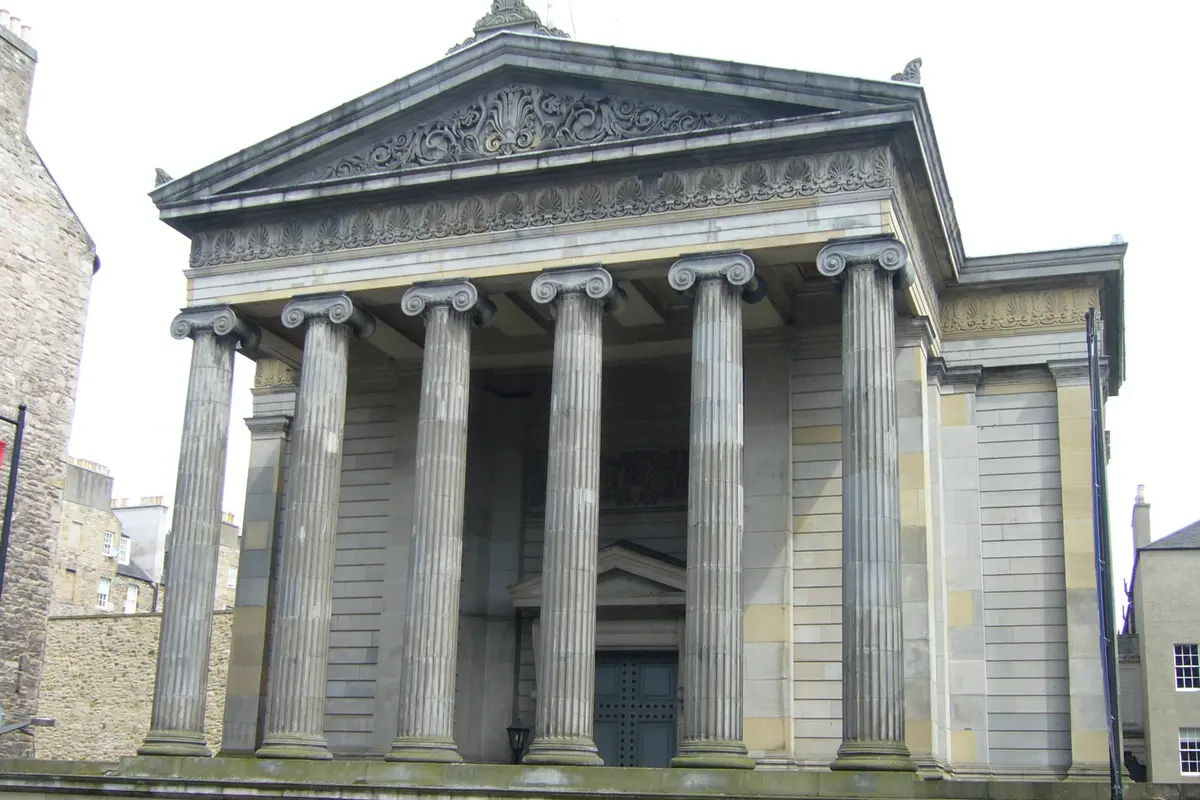
The Royal College of Surgeons of Edinburgh has its main campus on Nicolson Street, centred on Surgeons' Hall. The campus also holds a museum, a library and a hotel, and the College is one of the oldest surgical corporations in the world, so the setting feels like a working institution rather than a theatre. The show's contact page gives the address as Nicolson Street, Edinburgh EH8 9DW. On the evening, look for the Pipe Major on the street just before the show opens. Your confirmation carries the map link, and it shows the arrival time. The arrival time on your confirmation is the one that applies to your booking, so use it over any time quoted elsewhere.
Language, and following the poem
Burns wrote the Address to a Haggis in Scots, so even many English speakers won't catch every word. You don't need to. The pipes, the entrance of the dish and the moment you taste it carry the ceremony. For a visitor who speaks another language, the dances and the music need no translation at all, and the ceremony is easy to follow by watching what happens to the haggis. If you want the words, the poem is easy to find online before you go, and reading a few lines first makes the moment more fun.
Booking, season and cancelling
The show runs nightly from April to October and, for the rest of the year, subject to demand, so a winter date may not exist. Open dates appear in the booking calendar. Booked through GetYourGuide, a ticket can be cancelled free up to 24 hours before and can be reserved now and paid for later. The show's own site asks for 48 hours' notice, by phone, for a refund or credit, and charges no-shows in full. Large groups should contact the show's office directly rather than booking online.
Before or after the show
The College campus on Nicolson Street includes Surgeons' Hall Museums, a medical and surgical museum, so a daytime visit can be paired with an evening booking on the same street. The museum has its own hours and tickets, separate from the dinner show, so check them on its website. For other ideas near the evening, our guide to Edinburgh evenings covers other ways to fill a night in the city.
Who this isn't for
Skip this if you want a loud night out with dancing of your own, because here the cast dances and the audience watches. Skip it if you can't sit for three hours or want to be out quickly. Skip it if you want a quiet, low-key meal, because the pipes are loud and the show is the point. And if you would rather not eat in a seated, set-timetable room, try a cèilidh or a pub instead.
Read next: Spirit of Scotland Show vs a ceilidh vs a whisky evening
Frequently asked questions
How long does the Spirit of Scotland Show last?
The whole evening lasts about three hours, including dinner. The show itself runs for about ninety minutes. Your confirmation shows the time you need to arrive.
What should I wear to the show?
There is no dress code on the show's own pages. Smart-casual clothes you would wear to a good restaurant are fine, and nobody expects you to wear a kilt.
Will I have to dance or sing?
No. Audience participation is encouraged, so you may be invited to sing along or try a dance, but it is optional. The dancers perform for you.
Is the show suitable for children?
Yes. It is open to all ages, with child tickets for ages 4 to 15, an infant band for ages 0 to 3 and a children's menu. Three hours is a long sitting for small children.
Which dances will I see?
The programme includes the Highland Fling and a Scottish sword dance. Both are solo Highland dances. The Fling is danced on the spot in a kilt, and the sword dance is danced around crossed swords.
Is the venue wheelchair accessible?
The evening is listed as wheelchair accessible. If you rely on step-free access, contact the show before you book to confirm the route for your date.
Sources
- Spirit of Scotland Show: schedule, menu and cancellations (official)
- Spirit of Scotland Show, Edinburgh (official home page)
- Contact and address (Spirit of Scotland Show, official)
- Royal College of Surgeons of Edinburgh (Wikipedia)
- Highland dance (Wikipedia)
- Highland fling (Wikipedia)
- Great Highland bagpipe (Wikipedia)
- Cèilidh (Wikipedia)